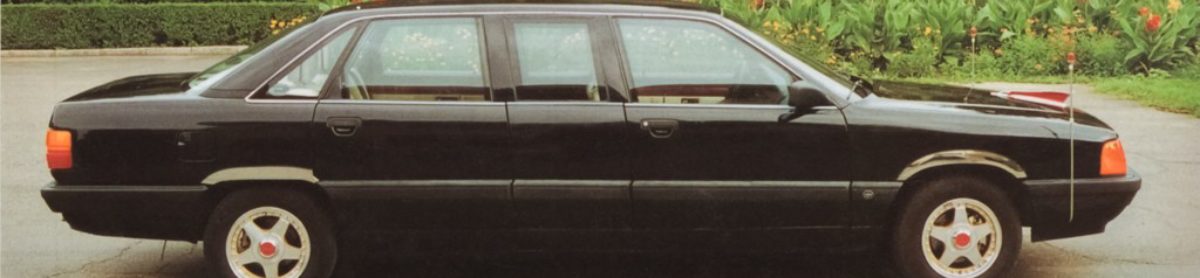
Today in Crazy Car Production Days of Guangdong (CCPDoG™):Sanjiu Auto. This company made at least five cars under the infamous Guangdong scheme in the 1990’s. Read all the details about it here.
One of the intriguing mysteries of China’s car history is the missing CA70.
Dongfeng clay model, ‘1*04954’
In the mid-1950s First Auto Works (FAW) started truck production and the development of a complete automobile production program. The first products were the CA10 truck, a CA30 cross-country truck, a CA40 dumper truck, a CA50 truck tractor, a CA80 agricultural truck.
And a CA71 car. The CA71 car is the Dongfeng which is beautifully described by my colleague Tycho in a recent article. Soon followed by the bigger Hongqi CA72.
That gives a mystery, as which car was the CA70?
Today in Crazy Car Production Days of Guangdong (CCPDoG™): Guangdong Passenger Car Factory, a company based in the great city of Guangzhou in Guangdong Province.
This beautiful red sedan is First Auto Works Dongfeng CA71, officially known as ‘China’s first car’. It was born in 1958 on the special request of Mao Zedong, who demanded a Chinese state limousine. I met it at the Beijing Classic Car Museum to the far north of the capital.
Today in Crazy Car Production Days of Guangdong (CCPDoG™): Guangtong Passenger Car, a company based in the great city of Zhuhai in Guangdong Province. They produced a series of small and medium sized buses under the Jinhui Auto brand name, using the designation GTZ.
In addition to that they also ‘made’ at least five cars under the infamous Guangdong scheme in the 1990’s. Read all the details about it here. Under this scheme Guangtong Passenger Car would be approached by a third-party company to ‘manufacture’ cars, using Guangtong Passenger Car’s car-making license.
In the mid 200’s Fiat was in big trouble, so they went to China. Not to sell cars but to offload entire production lines to Chinese car makers.
In 2007 they sold the platform for the Alfa Romeo 166 to Guangzhou Auto, and then the Italians went to Zotye for a more complicated deal that included cars of Fiat, Fiat do Brasil, and Lancia.
Car museums and veteran car exhibitions are getting more and more popular in China. These museums like to exhibit those cars which stood at the dawn of the Chinese automotive industry. And here they are confronted with a problem: due to intensive scrap regulations most of these cars have disappeared. China would not be China if there was a creative solution. The exhibitors simply make replicas of these cars. Now we meet two problems; one, the replicas are often crudely made, mostly due to ignorance; two, some museums don’t tell the visitor that he is looking at a replica. Here some examples.
Today in Chinese Car Brands That Time Forgot (CCBTTF™): Ling Kong, a brand under the People’s Liberation Army No. 5408 Factory. The company was based in the great city of Luoyang in Henan Province. In the late 1980’s and 1990’s they made a series of wagons, pickup trucks, and mini cars, using the designation KJ.
Welcome to a brand new series on ChinaCarHistory.com: Chinese Concept Cars (CCC). We start with the red hot Haima S1 coupe; it debuted on the April 2006 Beijing Auto Show, painted in fiery red and looking perfectly sporty.